

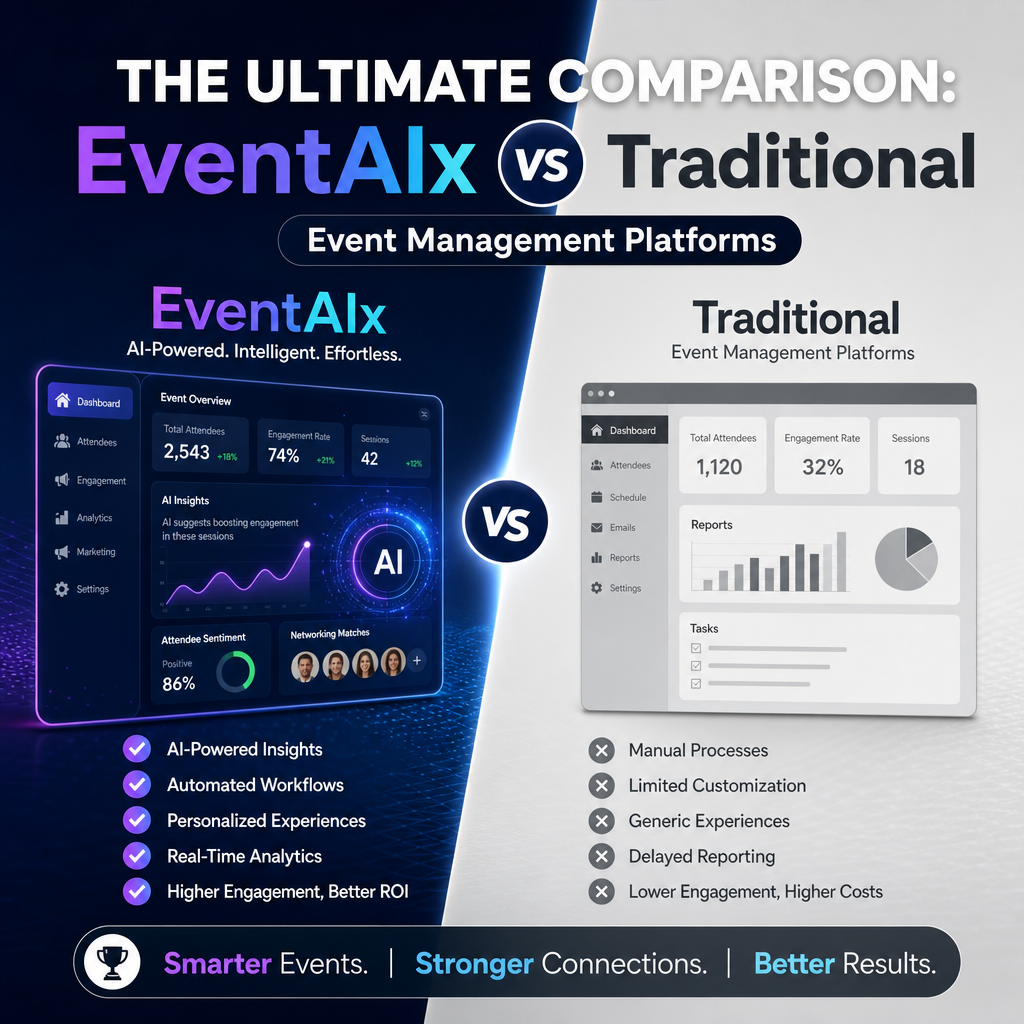
The Ultimate Comparison: EventAIx vs Traditional Event Management Platforms
The Ultimate Comparison: EventAIx vs. Traditional Event Management Platforms
Choosing the right event technology can make or break an event. Whether you are planning a small webinar, a hybrid conference, or a large in-person summit, the platform you use affects everything from registration to attendee engagement and post-event reporting.
In this comparison of EventAIx vs. traditional event management platforms, we’ll look at what sets them apart, where each one fits best, and how to decide which approach makes sense for your next event.
What Traditional Event Management Platforms Do Well
Traditional event management platforms have been the standard for years. They are built to handle core event tasks reliably and at scale.
Common features include:
- Event registration and ticketing
- Agenda and session scheduling
- Email invitations and reminders
- Basic attendee check-in
- Standard reporting dashboards
- Integration with payment and CRM tools
For many organizers, these tools are enough. They help automate repetitive tasks and keep event operations organized. If your event structure is simple and predictable, a traditional platform can be a practical choice.
What Makes EventAIx Different
EventAIx represents a more intelligent, adaptive approach to event management. Instead of simply digitizing the same manual processes, it uses AI-driven features to help organizers make better decisions faster.
Rather than waiting for the event team to analyze data after the fact, EventAIx can assist in real time with:
- Personalized attendee experiences
- Smart session recommendations
- Automated content suggestions
- Predictive analytics
- Behavior-based engagement triggers
- Dynamic scheduling support
This makes EventAIx less of a static software tool and more of an active event assistant.
EventAIx vs. Traditional Event Management Platforms: Key Differences
1. Automation vs. Intelligence
Traditional platforms automate workflows, but they still depend heavily on manual input. You set up the event, define the rules, and manage the experience yourself.
EventAIx goes a step further. It can analyze attendee behavior, suggest actions, and adapt based on live data. That means less guesswork and more informed decisions during the planning process and while the event is underway.
2. Personalization at Scale
Traditional platforms usually offer basic personalization, such as using the attendee’s name in emails or recommending sessions based on simple filters.
EventAIx can do much more. It can tailor experiences based on interests, past engagement, registration patterns, and live behavior. This creates a more relevant journey for each attendee without adding a heavy workload for the organizer.
3. Reporting and Analytics
Most traditional platforms provide standard reports like attendance numbers, session check-ins, and ticket sales. These are useful, but often limited to historical data.
EventAIx can provide deeper insights, including:
- Predicted attendee drop-off
- Engagement trends
- Session popularity forecasts
- Real-time audience behavior
- Suggestions for improving future events
For teams that rely on data to improve ROI, this can be a major advantage.
4. Planning Efficiency
With traditional tools, event teams still spend a lot of time manually coordinating tasks. This includes updating schedules, sending reminders, segmenting audiences, and creating reports.
EventAIx can reduce that workload by automating smarter workflows. It may help flag important changes, recommend next steps, and streamline repetitive planning tasks. That gives teams more time to focus on strategy, sponsors, speakers, and attendee experience.
Which Platform Is Better for Different Event Types?
The answer depends on your goals, team size, and event complexity.
Traditional platforms are a good fit if you need:
- A straightforward registration system
- Basic event marketing and ticketing
- Familiar workflows for a small team
- Lower-cost tools for simple events
EventAIx may be better if you need:
- Advanced attendee personalization
- Stronger data-driven decision-making
- Real-time optimization during events
- Support for large, multi-session, or hybrid events
- Higher engagement with less manual effort
If your events are growing in size or becoming more complex, the added intelligence of EventAIx can provide a real competitive edge.
Cost vs. Value
Traditional event management platforms often come with lower upfront costs. For organizations with limited budgets, this can be a major advantage. But lower cost does not always mean lower total effort.
If your team spends hours managing manual tasks, analyzing reports, or troubleshooting attendee issues, the true cost may be higher than expected.
EventAIx may require a larger investment, but it can save time, improve engagement, and help produce better outcomes. Over time, those gains can outweigh the initial expense.
The Bottom Line
When comparing EventAIx vs. traditional event management platforms, the choice comes down to how much intelligence and adaptability you want in your event strategy.
Traditional platforms are dependable, familiar, and effective for standard event operations. EventAIx is built for teams that want more than automation — they want insight, personalization, and real-time optimization.
If your goal is simply to manage an event, traditional tools may be enough. If your goal is to create smarter, more engaging, and more measurable experiences, EventAIx may be the better long-term solution.