

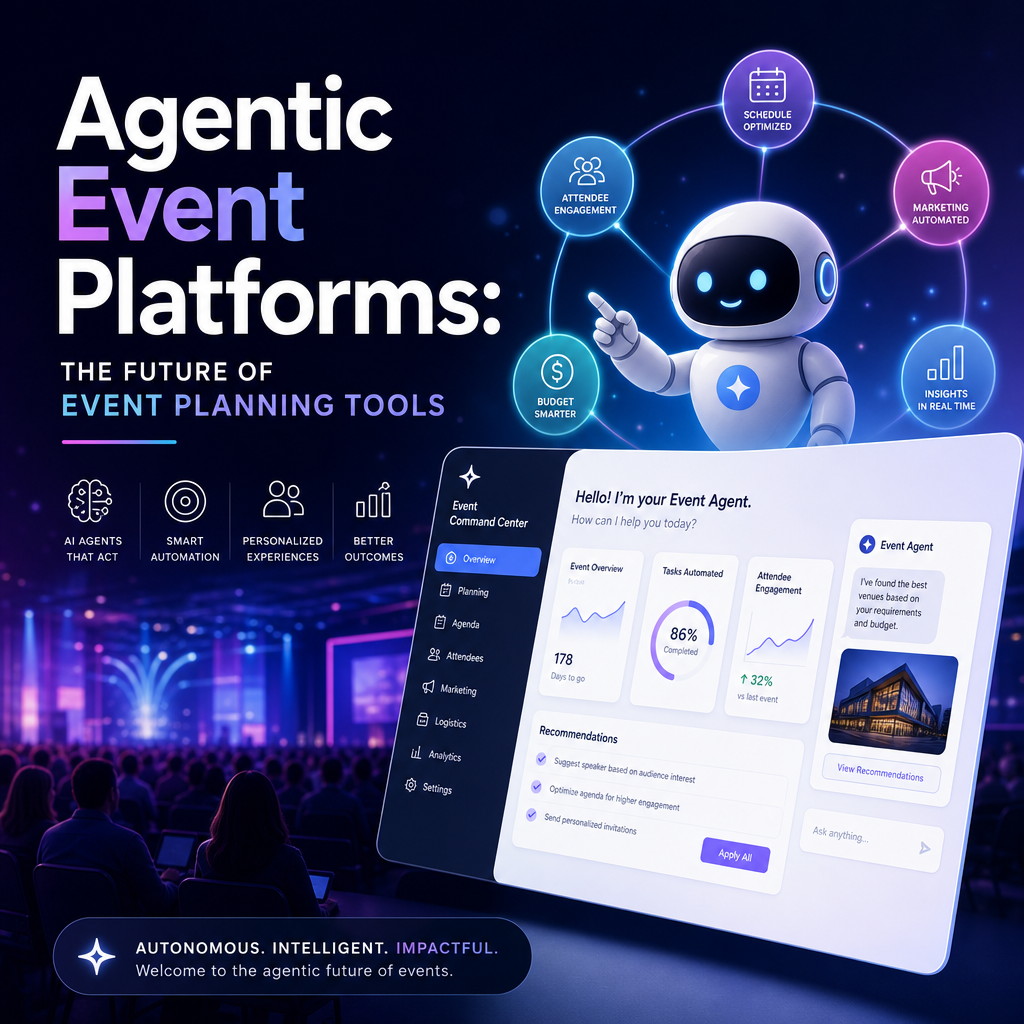
Agentic Event Platforms: The Future of Event Planning Tools
The Future of Events: Why Agentic Event Platforms Are Replacing Traditional Planning Tools
Event planning is changing fast. For years, teams relied on spreadsheets, email threads, static project boards, and disconnected apps to manage everything from registrations to speaker coordination. Those tools still work, but they were built for a slower, more manual way of planning.
Today, a new model is emerging: agentic event platforms.
These platforms do more than store information or automate a few repetitive tasks. They actively help plan, coordinate, and optimize event workflows in real time. As events become more complex and expectations rise, agentic event platforms are quickly becoming the smarter choice.
What Makes Agentic Event Platforms Different?
Traditional planning tools are mostly passive. They wait for humans to enter data, update status, and connect the dots. If something changes, the planner has to notice it and fix the ripple effect manually.
Agentic event platforms take a more proactive approach. They use AI-driven agents that can interpret goals, make recommendations, take actions, and adapt as conditions change.
In simple terms, they can:
- Suggest next steps based on event goals
- Detect scheduling conflicts or missing tasks
- Coordinate across vendors, speakers, and teams
- Personalize attendee experiences
- Adjust plans when data or conditions change
Instead of just helping planners work faster, they help reduce the amount of work that needs to be done in the first place.
Why Traditional Tools Are Falling Behind
Most event teams use a patchwork of tools. One system handles registration, another handles communication, another tracks budgets, and another stores tasks. This creates fragmentation.
That fragmentation leads to problems like:
- Duplicate data entry
- Missed deadlines
- Version control issues
- Poor visibility across teams
- Slow responses when plans change
Traditional tools are useful, but they depend heavily on human oversight. The bigger the event, the more time gets spent on coordination instead of strategy.
For modern event teams, that model is becoming unsustainable.
The Big Advantages of Agentic Event Platforms
Agentic event platforms are replacing traditional planning tools because they solve the core pain points of event management: complexity, speed, and personalization.
1. They reduce manual work
One of the biggest benefits is automation that actually acts intelligently. Instead of creating one workflow for every scenario, planners can rely on systems that understand context.
For example, if a keynote speaker cancels, the platform can trigger alerts, suggest replacements, update the agenda, and notify affected attendees.
2. They improve decision-making
Event planners often make decisions with incomplete information. Agentic platforms can analyze attendee behavior, budget trends, and operational data to surface useful insights.
That means planners can answer questions like:
- Which sessions are likely to be most popular?
- Where are attendees dropping off in the registration process?
- Which sponsor placements deliver the most value?
- What schedule changes would improve engagement?
Better data leads to better events.
3. They personalize the attendee journey
Modern attendees expect experiences that feel relevant and convenient. Agentic event platforms can tailor recommendations, reminders, and content based on interests and behavior.
That might include:
- Session suggestions
- Networking recommendations
- Personalized agendas
- Smart follow-up emails
- Custom content paths
Personalization is no longer a luxury. It’s becoming the standard.
4. They adapt in real time
Events rarely go exactly as planned. Speakers run late, rooms fill up, weather changes, and attendees shift priorities.
Traditional tools struggle with these changes because they require manual updates across multiple systems. Agentic event platforms can respond much faster, helping teams adapt without losing momentum.
What This Means for Event Professionals
The rise of agentic event platforms does not mean event planners become obsolete. It means their role becomes more strategic.
Instead of spending hours on repetitive coordination, planners can focus on:
- Creative event design
- Audience strategy
- Sponsor and partner relationships
- High-level experience planning
- Measuring event impact
In other words, the planner becomes less of a task manager and more of an experience architect.
That shift is especially important for teams running hybrid and large-scale events, where operational complexity can easily overwhelm manual systems.
A Smarter Future for Events
The future of events will not be built on more spreadsheets or more disconnected software. It will be built on systems that understand goals, anticipate needs, and take action intelligently.
That is why agentic event platforms are gaining momentum. They bring together automation, AI, and real-time adaptability in a way traditional planning tools simply cannot match.
For event teams looking to save time, improve attendee experience, and stay ahead of change, the move is clear. The future belongs to platforms that do more than organize work. It belongs to platforms that help create better events.