
How to Launch a City-Wide Event Ecosystem with EventAIx
How to Launch a Full Event Ecosystem for Your City Using EventAIx
Cities that want to grow tourism, support local businesses, and create stronger communities need more than a calendar of scattered events. They need a connected system where organizers, venues, sponsors, vendors, and attendees all work inside one shared environment. That is the idea behind a full event ecosystem.
With EventAIx, cities can move beyond manual planning and disconnected promotion. Instead, they can build a smarter, data-driven event network that helps every part of the local event economy work together.
What a Full Event Ecosystem Really Means
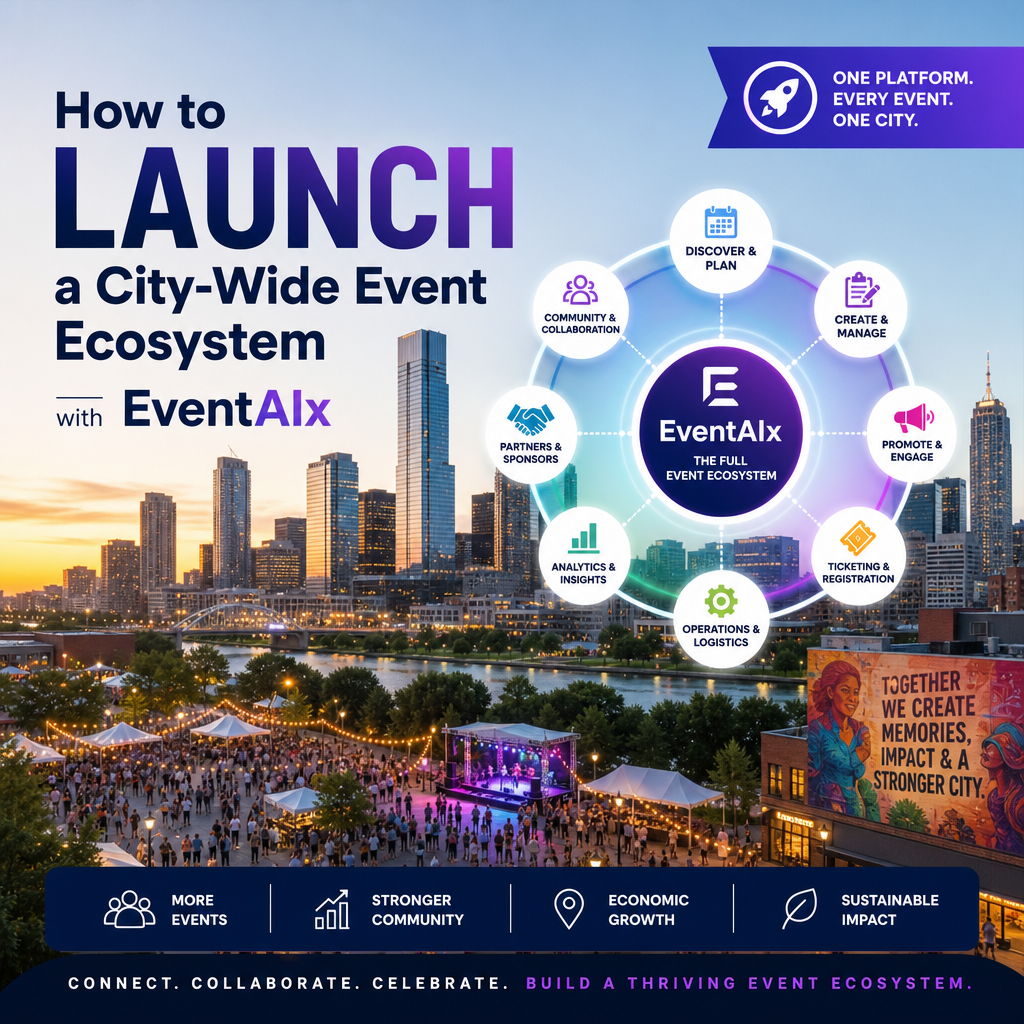
A full event ecosystem is not just about hosting more events. It is about creating the infrastructure to support events at every stage:
- Discovering what audiences want
- Helping organizers plan faster
- Connecting venues and vendors
- Promoting events across channels
- Tracking attendance and engagement
- Measuring economic and community impact
When these pieces are linked, events become easier to manage and more valuable to the city as a whole.
Why Cities Need a Smarter Event Strategy
Many cities struggle with the same problems. Events are promoted in different places, information is hard to find, and small organizers lack the tools larger groups already have. Attendees often miss out because event discovery is fragmented.
A smart platform like EventAIx helps solve these issues by centralizing event intelligence. That means city leaders can see patterns, identify demand, and support programming that actually fits the community.
The result is a more active cultural calendar, stronger local spending, and better use of public and private resources.
Step 1: Build a Central Event Hub
The first step in launching a full event ecosystem is creating one place where all event information lives.
This hub should include:
- Citywide event listings
- Venue profiles
- Organizer tools
- Vendor and sponsor directories
- Ticketing or registration links
- Community calendars
EventAIx can act as the foundation for this hub, making it easier to manage event data in one system. Instead of multiple departments or organizations posting information separately, everyone can feed into a shared platform.
This makes events easier to discover and far more consistent to promote.
Step 2: Use AI to Match Events With Audience Demand
One of the biggest advantages of EventAIx is its ability to use data and automation to improve decision-making. Cities can analyze what residents and visitors are actually interested in, then use those insights to shape event programming.
Examples of useful insights include:
- Which event categories perform best
- What times and dates attract the most attendance
- Which neighborhoods are underserved
- Which audiences engage most with specific event types
- What kinds of seasonal events drive repeat visits
This helps city planners and organizers stop guessing. They can instead build an event mix that reflects real audience behavior.
Step 3: Support Organizers With Better Tools
A strong event ecosystem must serve the people creating the events. That includes city departments, nonprofits, small businesses, arts groups, and independent planners.
EventAIx can make the planning process smoother by offering tools that reduce repetitive work. For example:
- Automated event descriptions
- Suggested promotional messaging
- Smart scheduling support
- Audience targeting recommendations
- Performance tracking dashboards
When organizers save time, they can focus more on creating better experiences. That improves the entire ecosystem.
Step 4: Connect Local Businesses and Venues
Events are stronger when they are tied to local economic activity. Restaurants, hotels, shops, transportation services, and venues all benefit when events bring people into the city.
A full event ecosystem should make those connections easy.
With EventAIx, cities can help businesses and venues appear as part of the event experience. That might include:
- Nearby restaurant recommendations
- Hotel partnerships for major events
- Vendor listings for festivals and markets
- Venue availability tools
- Cross-promotion opportunities
This creates a network effect. One event does not just attract attendees; it activates the surrounding local economy.
Step 5: Promote Across Every Channel
Even the best event will fail if people do not hear about it. A successful citywide event ecosystem needs strong promotion across digital and community channels.
EventAIx can help cities streamline promotion by supporting:
- Social media content generation
- Email campaign planning
- Personalized event recommendations
- Website integration
- Mobile-friendly discovery
- Automated reminders and updates
The goal is to make sure the right people see the right event at the right time. That improves attendance and reduces wasted marketing effort.
Step 6: Measure Impact and Improve Continuously
Launching an ecosystem is not a one-time project. It is an ongoing process of learning and improvement.
Cities should track key metrics such as:
- Attendance growth
- Event discovery traffic
- Ticket conversions
- Business revenue impact
- Visitor engagement
- Repeat participation
EventAIx can help turn these numbers into actionable insights. Over time, city leaders can see which event types create the most value and where support is needed most.
This makes planning more strategic and helps justify future investment.
Building a City That Runs on Events
A city with a full event ecosystem is more vibrant, more connected, and more economically resilient. Instead of isolated events competing for attention, every part of the local network works together.
EventAIx gives cities a practical way to make that happen. By combining discovery, planning, promotion, and analytics in one platform, it helps build an event system that serves organizers, businesses, and residents alike.
If your city wants to become a true destination for culture, community, and commerce, the first step is not just launching more events. It is building the ecosystem that makes great events possible.