
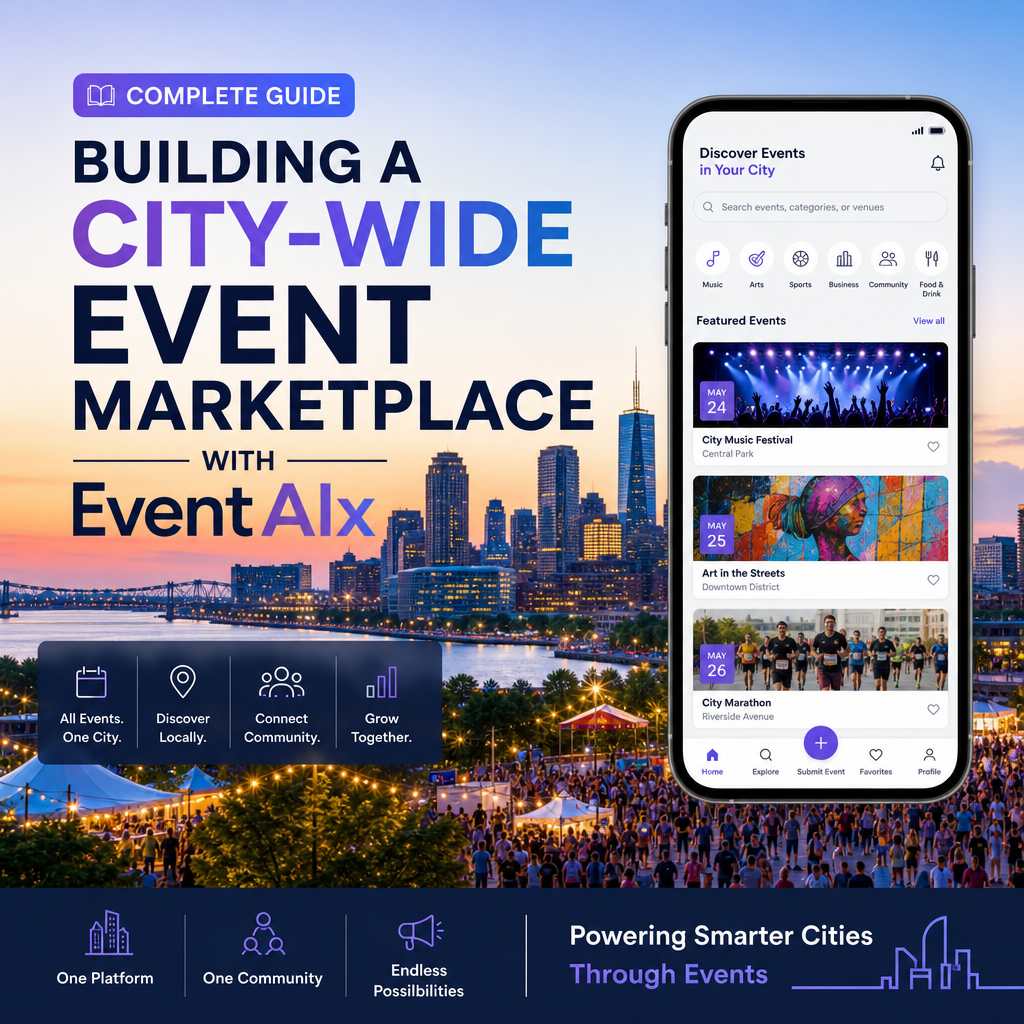
Complete Guide to Building a City-Wide Event Marketplace With EventAIx
The Complete Guide to Building a City-Wide Event Marketplace With EventAIx
A city-wide event marketplace brings together concerts, workshops, festivals, pop-ups, classes, and community gatherings in one searchable place. Instead of scattered listings across social media, email newsletters, and venue websites, people get a single destination for discovering what’s happening nearby.
Building one is not just about posting events. It’s about creating a trusted platform that helps residents find experiences, helps organizers sell tickets or fill seats, and helps city businesses connect with local audiences. That is where EventAIx can make a major difference.
Why a City-Wide Event Marketplace Matters
Cities thrive when people can easily discover and attend events. A well-designed marketplace creates value for everyone involved.
For attendees
- Faster event discovery
- Better filtering by date, location, price, and category
- Personalized recommendations based on interests
- One place to browse everything happening in the city
For organizers
- More visibility for events
- Less dependence on fragmented promotional channels
- Easier ticket distribution and listing management
- Access to local audiences that are already looking for things to do
For the city
- Stronger local engagement
- Increased foot traffic for businesses and venues
- More support for cultural and community activities
- Better visibility into what kinds of events are attracting attention
Start With a Clear Marketplace Structure
Before launching, define the marketplace model. This determines how users interact with the platform and how event data is organized.
Core marketplace categories
Most city-wide platforms benefit from a few broad event types:
- Music and nightlife
- Arts and culture
- Family and community
- Business and networking
- Food and drink
- Sports and wellness
- Education and workshops
A simple structure makes browsing easier and helps search engines understand the site.
Essential user roles
A successful marketplace usually has three main user groups:
- Attendees who browse and buy tickets
- Organizers who create and manage events
- Admins who review content, manage trust, and monitor performance
EventAIx can support these roles by streamlining event submissions, approvals, and personalized event discovery.
Build the Right Features First
A strong event marketplace does not need every feature on day one. Focus on the essentials that solve real user problems.
Must-have features
- Event listings with images, descriptions, and categories
- Date, time, and location details
- Search and filtering tools
- Ticketing or RSVP functionality
- Organizer profiles
- Mobile-friendly design
- Map integration
- User reviews or ratings, if appropriate
Smart features powered by EventAIx
To stand out, your marketplace should do more than display listings. EventAIx can help add intelligence to the experience:
- Event recommendations based on behavior and preferences
- Automated event tagging and categorization
- Duplicate detection and content cleanup
- Better search relevance
- Insights into trending event types and neighborhoods
These features improve the user experience while reducing manual work for your team.
Focus on Local Discovery
A city-wide marketplace only works when people can quickly find events near them. Local discovery should be at the heart of the design.
Improve location-based browsing
Use neighborhood filters, venue pages, and map views so users can explore events by area. Many people search by convenience, not just by category.
Highlight timely content
Promote:
- Events happening this weekend
- Free events
- Family-friendly activities
- Last-minute openings
- Seasonal highlights
This keeps the marketplace fresh and useful, which encourages repeat visits.
Make It Easy for Organizers to Publish
If submitting an event feels complicated, organizers will not use the platform regularly. Keep the listing process simple and intuitive.
Organizer-friendly tools
- Step-by-step event submission forms
- Draft saving
- Image upload guidance
- Ticketing integrations
- Automated reminders for event updates
Validation and moderation
Quality control matters. A marketplace becomes more valuable when listings are accurate and trustworthy. Use review workflows to check:
- Event dates
- Venue details
- Contact information
- Pricing
- Spam or duplicate listings
With EventAIx, many of these checks can be partially automated, reducing manual moderation time.
Promote the Marketplace Across the City
A great platform still needs adoption. Launching a city-wide event marketplace requires a promotion strategy that reaches both organizers and attendees.
Ways to grow fast
- Partner with venues and local businesses
- Collaborate with tourism boards and community groups
- Offer early organizer incentives
- Share featured events through email and social media
- Optimize event pages for local search
Build trust through consistency
People return to platforms that feel accurate, current, and active. Regular updates, high-quality listings, and responsive support will help the marketplace become a go-to city resource.
Measure What Matters
Once the marketplace is live, track performance so you can improve it over time.
Important metrics
- Monthly active users
- Event listing submissions
- Search-to-click rate
- Ticket conversions
- Repeat visits
- Top categories and neighborhoods
These insights reveal what users want and where the platform can improve. EventAIx can help surface patterns faster, making it easier to adjust content, features, and promotions.
Final Thoughts
A city-wide event marketplace can become one of the most valuable digital hubs in a community. It connects people to experiences, gives organizers a stronger promotional channel, and helps cities showcase their culture in a more organized way.
By combining thoughtful marketplace design with the intelligence of EventAIx, you can build a platform that is not only useful, but also scalable, personalized, and easy to manage. The key is to start with strong foundations, keep the experience local, and let data guide your growth.