
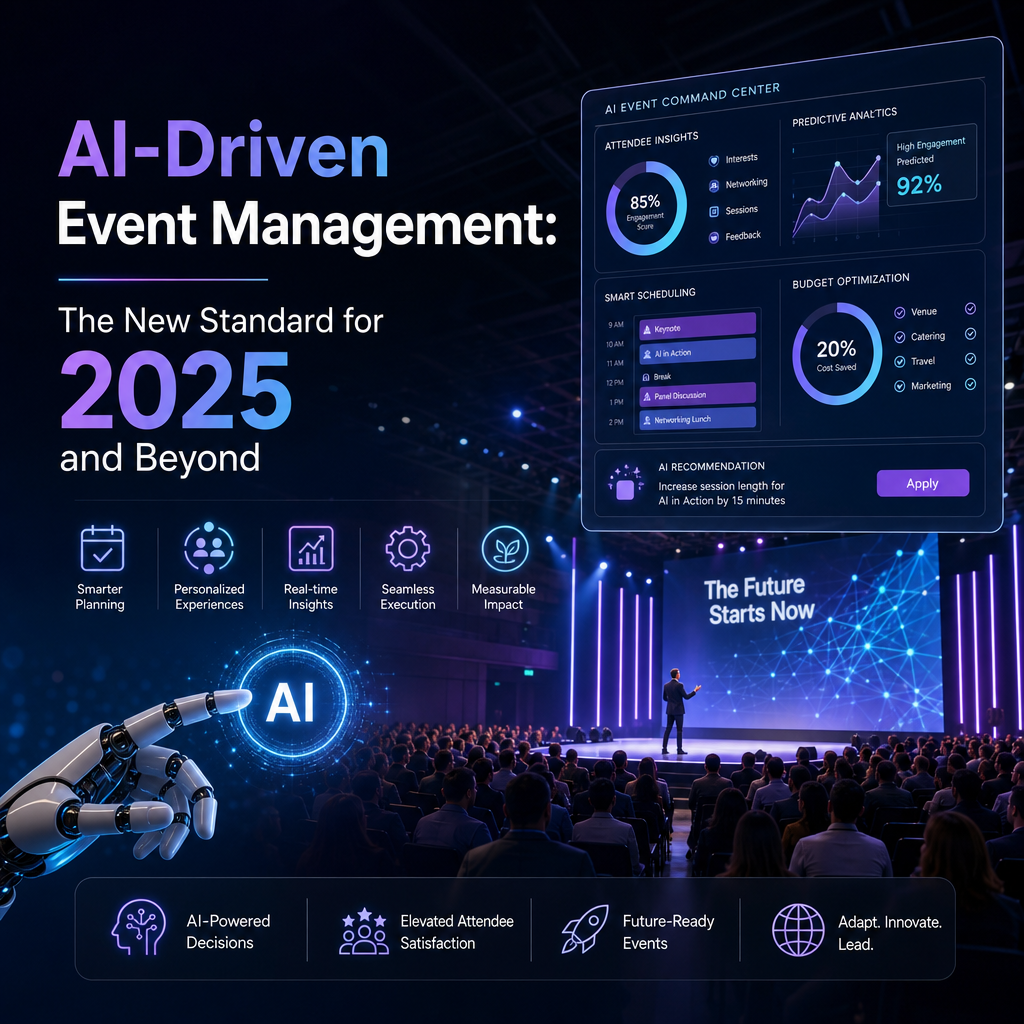
AI-Driven Event Management: The New Standard for 2025 and Beyond
Why AI-Driven Event Management Is the New Standard for 2025 and Beyond
The event industry is changing fast. What once depended on manual planning, static schedules, and guesswork is now being reshaped by intelligent automation. In 2025 and beyond, AI-driven event management is no longer a futuristic advantage — it is becoming the new standard.
From corporate conferences to hybrid expos and private brand activations, event teams are under more pressure than ever to deliver seamless, personalized, and measurable experiences. AI is helping them do exactly that.
The Shift From Manual Planning to Smart Event Operations
Traditional event planning involves countless moving parts. Registration, scheduling, speaker coordination, attendee engagement, feedback collection, and post-event reporting all take time and attention.
AI simplifies this process by handling repetitive tasks and identifying patterns that humans may miss. Instead of spending hours updating spreadsheets or manually sorting attendee data, organizers can use AI tools to automate workflows and make faster decisions.
What AI brings to event management
- Faster registration and check-in
- Smarter attendee segmentation
- Real-time schedule optimization
- Personalized recommendations
- Automated follow-ups and reporting
This shift is not just about convenience. It improves the overall quality of the event experience.
Personalization Is Now Expected
Attendees in 2025 expect more than a generic agenda and a badge at check-in. They want content, networking, and sessions that match their interests. AI makes this level of personalization possible at scale.
By analyzing attendee behavior, preferences, and past interactions, AI can recommend:
- Relevant breakout sessions
- Networking matches
- Exhibitor booths
- Content tracks
- Sponsored opportunities
This creates a more engaging experience for attendees and better outcomes for event organizers and sponsors. When people feel that an event understands them, they are more likely to participate actively and return in the future.
Better Data Means Better Decisions
One of the biggest reasons AI-driven event management is becoming essential is data. Events generate massive amounts of information, from registration trends to session attendance and engagement metrics.
AI can turn that data into useful insights in real time.
With AI, organizers can:
- Predict attendance levels
- Identify which sessions are most popular
- Track drop-off points in hybrid or virtual events
- Measure engagement across channels
- Improve future event planning based on behavior patterns
Instead of waiting until after the event to see what worked, teams can adjust strategy while the event is still running. That agility is becoming a major competitive advantage.
AI Improves the Attendee Experience
A successful event is not just well-organized. It feels effortless to attendees. AI contributes to this by reducing friction at every stage of the journey.
For example, chatbots can answer common questions instantly, such as venue directions, schedule changes, or speaker details. Smart check-in systems can reduce waiting lines. Recommendation engines can help attendees navigate large conferences without feeling overwhelmed.
Common ways AI improves experience
- Instant support through AI chatbots
- Real-time agenda updates
- Personalized notifications
- Smarter matchmaking for networking
- Accessibility support through automated captioning and translation
These features help attendees stay informed, connected, and engaged throughout the event.
Event Teams Need Efficiency More Than Ever
Budgets are tighter. Expectations are higher. Teams are smaller. That combination makes efficiency critical.
AI helps event professionals do more with less by automating time-consuming tasks and reducing human error. This allows planners to focus on strategy, creativity, and relationship-building rather than admin-heavy work.
For example, instead of manually sending reminder emails, AI can trigger communications based on attendee behavior. Instead of reviewing feedback one response at a time, AI can summarize trends and sentiment automatically.
That means faster execution and stronger results.
Hybrid and Virtual Events Depend on AI
Hybrid events remain a major part of the landscape in 2025. These events need to serve both in-person and remote audiences without making either group feel secondary.
AI is especially valuable here because it can help bridge the gap between physical and digital experiences.
It can:
- Recommend sessions based on format preference
- Balance content for online and live audiences
- Support virtual networking
- Automate live captions and translations
- Track engagement across both environments
Without AI, managing hybrid complexity becomes significantly harder. With it, the experience becomes more unified and scalable.
The Future Belongs to Data-Driven Experiences
As technology continues to advance, event audiences will expect smarter, faster, and more customized experiences. AI is not replacing event planners. It is giving them better tools to meet modern demands.
The most successful events in 2025 and beyond will be those that combine human creativity with machine intelligence. AI handles the data, automation, and prediction. Event professionals bring the vision, strategy, and personal touch.
Together, they create events that are more efficient, more engaging, and more memorable.
Final Thoughts
AI-driven event management is no longer optional for organizations that want to stay competitive. It is becoming the standard because it solves real problems: complexity, personalization, efficiency, and measurement.
In a world where every attendee expects a smoother, smarter experience, AI helps event teams deliver at a higher level. The future of events is not just digital. It is intelligent.